Google and Real Turkey

Özel Arama
I am a citizen of Istanbul and you can find my recommendations regarding what you should do during your stay at Istanbul.

You know, most of the tourists just visit the most popular places and return to their countries without experiencing the real city life.

The objective of my blog is to help you to see the real city life in Istanbul.
Showing posts with label Turkish Culture. Show all posts

Monday, June 09, 2014

Where to buy Turkish delight in Turkey?

Ali Muhiddin Hacıbekir - The Oldest Turkish Delight

"Ali Muhiddin Hacıbekir - The oldest brand name for Turkish Delight" 


"Famous Turkish Delight"


Ali Muhiddin Hacıbekir, established in 1777, is the oldest firm of Turkey and it has worldwide fame for Turkish delight. It is accepted as the inventor of Turkish delight. You can find the shops of Ali Muhiddin Hacıbekir below.

HEAD OFFICE
İstiklal Cad. No.83 / 6 34433 Beyoğlu / Istanbul
Tel. 212 245 13 75 - 76
Fax. 212 252 33 50
e-mail : hacibekir@hacibekir.com.tr
http://www.hacibekir.com/en/

PARMAKKAPI
İstiklal Cad. No. 83A 34433 Beyoğlu / Istanbul
Tel. 212 244 28 04

EMİNÖNÜ
Hamidiye Cad. No.83 34110 Eminönü / Istanbul
Tel. 212 522 06 66

BAHÇEKAPI
Hamidiye Cad. No. 81 34110 Bahçekapı / Istanbul
Tel. 212 522 85 43
Fax. 212 513 04 19

KADIKÖY
Muvakkithane Cad. No. 14-16 34710 Kadıköy / Istanbul
Tel. 216 336 15 19
Fax. 216 346 06 20

HACIBEKİR ANKARA
Hoşdere Cad. 201/12 Çankaya/ Ankara
Tel. 312 441 84 07
Fax. 312 441 84 06


"Real Turkiye"

Monday, December 10, 2007

Turkish Raki Brands - Where to buy?


1. Yeni Raki

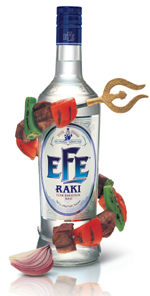
2. Efe Raki

3. Burgaz Raki

4. Beylerbeyi Raki
I have searched but could not find an online shop that sells Turkish Raki, if you are interested in buying Turkish Raki, then send me an e-mail to realturkiye[at]gmail.com and I can send you it via courier.
"Real Turkiye"

Tuesday, November 06, 2007

Greatest Turkish Poet, Nazim Hikmet

Listen to the poem of Nazim Hikmet -“Vatan Haini” (Traitor)


Another poem of Nazim Hikmet...

INVITATION

Galloping from Far Asia and jutting out
into the Mediterranean like a mare's head
this country is ours.

Wrists in blood, teeth clenched, feet bare
and this soil spreading like a silk carpet,
this hell, this paradise is ours.

Shut the gates of plutocracy, don't let them open again,
annihilate man's servitude to man,
this invitation is ours..

To live like a tree single and at liberty
and brotherly like the trees of a forest,
this yearning is ours.

translation by Fuat Engin


"Real Turkiye"

Monday, November 05, 2007

Old Turkish Films' Posters

The posters of old Turkish Films.


"Real Turkiye"

Friday, November 02, 2007

Barbers in Turkey

Turkish Barbers can be symbolized with straight razors, arko shaving soap.

"Real Turkiye"

Friday, October 19, 2007

Best Beer in Turkey

Here are some wallpapers of Efes Pilsen, In order to set them as your wallpaper, first click on the images to see the large size picture and then save them to your computer.


"Real Turkiye"

Thursday, September 13, 2007

Turkish Bath, Hamam

Turkish people used to have bath in Hamams but nowadays, Hamams are not widely used for having bath. Hamam is an old tradition of Ottoman Turks. I do not like having bath in Hamam because a lot of men go to the hamam and I think that hamam is a dirty location since the dirts of many people mix in the same place.

Hamams are interesting for tourists and they are willingful to have bath at Hamams.

Friday, September 07, 2007

History of Topkapi Palace


Topkapı Palace constructed by Fatih Sultan Mehmet, (the Conqueror) in 1478 has been the official residence of the Otoman Sultans and center of State Administration around 380 years until the construction of Dolmabahçe Palace by Sultan Abdülmecid. The palace having around 700.000 m.² area during the foundation years has currently 80.000 m.² area.

Topkapı Palace was evacuated by the accommodation of the Palace inhabitants in Dolmabahçe, Yıldız and in other palaces. Upon abandoning by the Sultans, Topkapı Palace where many officials resided had also never lost its importance. The palace was repaired from time to time. A special attention was taken for the annual maintenance of Mukaddes Emanetler Dairesi (Sacred Safekeeping Rooms) visited by the sultan and his family during Ramadan.


The opening of Topkapı Palace for visits as museum happened firstly in the reign of Sultan Abdülmecid (1839-1861). The belongings within Topkapı Palace Treasury was shown to the contemporary English ambassador. Later on, it has become a tradition to show the antics within the Topkapı Palace Treasury to the foreigners and during the era of Sultan Abdulaziz (1861-1876), showrooms are made in French style, and these antics are started to be shown to foreigners in these showrooms within Treasury. During the period when Sultan II Abdulhamid was dethroned (1876-1909), it was thought to open the Treasury Room to public visits on Sundays and Tuesdays, yet it never realized.

By the order of Ghazi Mustafa Kemal Atatürk, Topkapı Palace firstly affiliated to the Istanbul Asar-ı Atika Museums Directorate and opened to public visits on date of April 3, 1924, then it started to service as Treasury Chamberlain, after it was renamed as Treasury Directorate and finally it was renamed as Topkapı Palace Museum Directorate and it still continues its services.

Upon the performance of small repairs and taking some administrative cautions in 1924, Topkapı Palace was opened to service as a Museum on October 9, 1924. The sections opened to visit at that time were Kubbealtı, Arz Odası, Mecidiye Köşkü (Pavilion Mecidiye), Hekimbaşı Odası (Room of Chief Doctor), Mustafa Paşa Köşkü (Pavilion Mustafa Pasha) ve Bağdad Köşkü’dür (Pavilion Baghdad).

Monday, September 03, 2007

Zeybek, Aegean Folkloric Dance

At marriage ceremonies in the Aegean people dance the Zeybek.


A photo of Turkish Zeybek Dance Group.

Sunday, September 02, 2007

Hagia Sophia must be one of the Wonders of the World

Hagia Sophia is not selected as one of the wonders of the world but anyone who visits Hagia Sophia is very impressed atthe first sight. Hagia Sophia is both church and mosque where you can find holy Qoran words and Jesus, Virgin paintings. I advise everyone to visit Hagia Sophia!

Monday, July 16, 2007

Turkish Raki Commercials

Msn emotions for Turkish Raki and Drunk People
Efe Rakı Efe RakıEfe RakıEfe Rakı Efe Rakı

To download these msn emotions click here .


Efe Raki


Fasil Raki


Mey Yeni Raki

Tuesday, July 10, 2007

Raki and Turkish Culture

Raki entered our lives back in the second half of the 1800’s. It began to replace wine in the pubs accompanying the Cilingir tables (dinner tables full of meze). It brought fava, piyaz, feta cheese, and fruits together with it. Of course, it never lacked conversation either…

The songs that are sung at the raki tables are sometimes sad, sometimes happy, and sometimes about nothing at all; the purpose is to just drink raki and talk.

In the old days, drinking raki is seen as the first step into manhood. It’s a proud day for a father when his son can drink raki; afterall it means that his son is a man now. Noone was used to seeing women or young people drink raki.

But, as time passes by, it also keeps up with the times and even the ladies take their place at the Cilingir tables.

Whatever happens, however much the times change, raki stays as an indispensable part of our culture. Along with the Cilingir table and the conversation…

Resource: www.eferaki.com.tr

Thursday, June 21, 2007

Galata Mevlevi Lodge

The Mevlevi, or Mevleviye, one of the most well-known of the Sufi orders, was founded in 1273 by Mevlana Celaleddin Rumi's followers after his death. The Mevlevi, or "The Whirling more... Dervishes", believe in performing their dhikr in the form of a "dance" and music ceremony called the sema.

The Sema represents a mystical journey of man's spiritual ascent through mind and love to "Perfect." Turning towards the truth, the follower grows through love, deserts his ego, finds the truth and arrives to the "Perfect." He then returns from this spiritual journey as a man who has reached maturity and a greater perfection, so as to love and to be of service to the whole of creation.


Friday, May 04, 2007

Turkish Cuisine and Saray Muhallebicisi

If you travel to Istanbul, you should eat traditional Turkish foods at Saray Muhallebicisi. Saray Muhallebici is so popular for its sweets.


Sakızlı Muhallebi

Kazandibi


Aşure

Friday, April 06, 2007

Restoration of Akdamar (Akhtamar) Church

Island of Akdamar (Akhtamar) is located in the 50.km of highway of Van-Tatvan and is 4 km far away from the seaside.


The Akdamar Church was established by the king of Vaspurakan, Gagik the first, in years between 915 - 921. The king designed the church himself but built by architect Manuel. It was converted to monastery in 1113, when Kingdom of Vaspurakan came to end in 1021 and the Akdamar Church became the centre of the Armenian Patriarchate till 1895. After becoming the monastery, it started to be called Holly Cross Church.

At the end of the XIII. Century the Stephanus Chapel, in 1296 the Zacharias Chapel and in 1763 the Jamatun to the west of the church and lastly in the first half of XIX. Century the Tower of Gong were built.

The Akdamar Church has the best architectural decoration in the zone. In the outside part of the church you can see different themes done with different techniques of reliefs with different heights. In the first floor, started from the ground, the parts from the Bible and the Torah can be seen. The persons, princes, kings, saints related with Armenian history can be seen in the part of religious themes. Besides the beauty in the outside, the inside of the Akdamar Church is also famous with its frescos.


Turkey completed a $1.5 million restoration of the sandstone building, and invited Armenian officials to a ceremony to mark what Turkey's prime minister, Recep Tayyip Erdogan, has called a "positive" message.


An Armenian deputy culture minister and other prominent Armenians plan to attend the church's opening near the city of Van in eastern Turkey.


Thursday, April 05, 2007

Turkish Cuisine

Turkish Cuisine is of a great variety, a mixture of western and eastern cuisines with the flavor of unique Ottoman Cuisine. It can simply be categorized as;

Soups(Corba)
Cold appetizers(Meze)
Hot appetizers(Ara sicak)
Main Course(Ana yemek)
Vegetables cooked in olive oil(Zeytinyagli)
Pilafs(Pilav)
Deserts(tatli)
Fruit Mix(meyve)
Soft Drinks


Soups: To begin with, soups do come first. They are very important in Turkish Cuisine. The soups are usually made of chicken juice by adding different things,i.e tomatoes,lentil,rice,yoghurt, eggs and flour. The most famous soups of traditional Ottoman Cuisine are Dugun Corbasi(Wedding Day Soup), Iskembe Corbasi(Tripe Soup eaten with garlic juice and vinegar), Mercimek Corbasi(Red Lentil Soup) and Yayla Corbasi(Yoghurt and rice with dried mint). If the soups do not contain chicken or meat juice, they are deemed to be 'tasteless'...

Cold Appetizers: The cold appetizers are another unique part of the Turkish Cuisine. A good 'Meze Tabagi'(Meze Platter) usually contains Dolma(stuffed green pepper,tomatoes or leaves with rice and pinenuts), Beyaz Peynir(Turkish White Cottage Cow's Cheese), Barbunya(Red Beans cooked in olive oil), Humus(made of chickpeas), Cerkez Tavugu(Circassian Chicken, little chicken-breast pieces mixed with walnut, bread and spices), Haydari(very thick yoghurt mixed with garlic and mint), Ezme(red chilly pepper,tomato paste,mint and spices)and finally Yesil ve Siyah Zeytin(Green and Black Olives).

Hot Appetizers: The hot starters are usually pastries which are called as Boerek. Boereks are of various types; i.e pastry which is made of different, thin dough layers stuffed with ground meat or cheese,cooked in oven or pastry made of two thin dough layers with cheese or ground meat inside, fried in sunflower oil. With boreks, potato or cheese croquettes may be served. The most famous type of borek is called Su Boerek(Thin dough layers shock-boiled in water). Other hot appetizers are Patlican Kizartma (fried eggplants), Kabak Kizartma (fried zucchinis) and fried mussles or calamares.

Main Courses: The main courses usually include meat, mainly lamb and veal. Sometimes chicken is used for some recipies. The meat is accompanied with eggplants, zucchini or potatoes,either smashed or french-fried. The most famous main course is called Doner Kebab(similar to Gyro) and second famous is Shis-Kebab(small pieces of lamb or veal grilled). Other famous main courses are Hunkar Begendi(lamb served on eggplant pureé), Islim Kebab(lamb served in sliced eggplant), or Tandir(very soft lamb grilled) and Manti(Turkish Style Ravioli with garlic yoghurt and red-pepper butter sauce). With them, Ayran(Yoghurt mixed with water and salt) may be served..

Vegetables cooked in olive oil:Turkey is one of the biggest olive and olive oil producers of the world. Therefore, food cooked in olive oil is an indispensible part of our cuisine. The main olive oil dishes are Zeytinyagli Yesil Fasulye(String Beans in Olive Oil), Imam Bayildi(eggplant cut in from the middle, stuffed with onion and green pepper, served cold), Zeytinyagli Kuru Fasulye(Beans in olive oil), Zeytinyagli Enginar(Artichoke cooked with pieces of potatoes,carrots and peas).

Desserts:The desserts can be roughly divided into three,desserts made of milk, desserts made of pastry+syrups, desserts made of fruits and nuts...

Milky Desserts:The famous ones are Tavukgogsu(freshly cooked chicken breast into tiny pieces,mixed with pudding with rice flour,eggs and vanilla), Kazandibi(same dessert,put into oven,the bottom gets red and delicious), Keskul(milk,flour,rice flour, almonds, pistachio,eggs,vanilla).

Desserts with pastry and syrup:The famous ones are Baklava(very thin layers of buttered pastry filled with pistachio or walnuts,at least 20 layers),baked first in the oven, then cold syrup is added), Kadayif(pastry resembling human hair,put into the tray,added butter and walnut,cooked like baklava), Kunefe is a southeastern(Antakya) specialty, instead of walnuts, special Antakya cheese is put inside), Sekerpare(Piece of sugar) (is baked in the oven as a round cookie,nut is put on the top, and syrup is added.)

Desserts with fruit and nuts: The most famous one of this type is Asure which is a sacred desert. It's believed that after the disasterous storm in Mt.Agri of Turkey, the people in Noah's Ark, had to cook a strange food to survive by adding everything aboard, dried figs,apricots, raisins, walnut, chickpeas, white beans, rice, wheat and sugar. It's cooked still the same way by putting cinnamon on the top. The others are Ayva Tatlisi(Quince Dessert), quince boiled with sugar, after color turns to be red, syrup and cream is put on the top), Incir Tatlisi(Fig Dessert), dried figs are boiled in syrup,with cream and walnut toppings.

Soft Drinks: Major soft beverages are Ayran(Yoghurt mixed with water and salt added), Boza(winter drink,made of fermented bulgur wheat, thick as pudding,drunk with cinnamon), Salep(winter drink made of Salep powder and hot milk, cinnamon added), Salgam Suyu (Sugar beet juice), Elma Cayi(Apple tea), Ihlamur(Linden tea) and Turk Kahvesi(Turkish Coffee).


Fish Restaurants: If Turkey is surrounded by three seas and Istanbul is on the shore of Sea of Marmara, how about the fish restaurants? Fish restaurants are of a special style,once you go to have fish, you sit at the table for 1-2 hours and enjoy your meal very slowly by sipping your Raki. Raki contains 45% alcohol, it is quite strong. 1/3 of a typical raki glass is filled with raki, the rest is complemented with cold water,added ice if desired. The water-like liquid; when water is added, suddenly turns out white,a milk-like thing. It's often called "The Lion's Milk" by the Turkish. Raki is made of grapes and it's a non-fermented drink. It should be drunk very slowly with food, therefore the culture in the fish restaurants has developed...

In the fish restaurants, the food comes as if eating is a ritual, not an easy and quick thing. Cold appetizers, like white cheese, melon, beans in olive oil or shrimp do come first. After having some from each of them and starting sipping your "raki", comes the hot appetizers, like boreks or fish balls with a big bowl of fresh seasonal salad. Finally while you are enjoying the appetizers, your fish gets ready and you enjoy the most delicious part of your ritual. Finally you enjoy a light dessert or fresh fruits before putting an end to this pleasure. You waive you hand to the chief waiter who knows you for long years and go back home happily and relaxed...

Sunday, February 25, 2007

The History of Kirkpinar Oil Wretling

In 1346, during military expeditions led by Orhan Gazi to conquer Rumelia (the part of the Ottoman Empire which lay in Europe), his brother Süleyman Paşa marched with 40 soldiers to Domuzhisar, which was then in the hands of the Byzantines. They raided and conquered the Domuzhisar, or Domuz Fortress. After also conquering other fortresses, the group of 40 soldiers who formed the advance guard returned, and they came to rest in Samona, which is today in Greece. There, these 40 soldiers began to wrestle. After hours of wrestling, two brothers named Ali and Selim both proved unable to defeat the other.

On a Hidrellez day (a festival held on May 6 to celebrate the beginning of summer), these two brothers started wrestling again. The wrestling match lasted the entire day but still neither man could defeat his brother, so the contest continued throughout the night illuminated by candle and torch light. In the end, however, both of the brothers ran short of both breath and energy and so they died.

At the spot where the two men had perished, where there was a fig tree, their friends laid them to rest. Then many years later they came to visit the tree.

At that very place where the two brothers were buried, they found a great river flowing. Following this the people of the region start calling the area “Kırkpınar” (Forty Springs). This was at the green pastoral area of the Greek village of Samona. At the end of the Balkan wars and World War I, the Kırkpınar Wrestling Contest started to be held at the place called Virantekke, which is located between Edirne and Mustafapaşa. After the foundation of the Turkish Republic, since 1924 the contests have been held in Edirne’s Sarayiçi area.

Until 1928, ağas (landlords) organized the Kırkpınar Wrestling Contest and they entertained the guests and gave awards to the winners. However, due to economic troubles in the country, people became reluctant to volunteer to become agas. So, starting in 1928, the Turkish Red Crescent (Kizilay) and the Child Protection Society (Çocuk Esirgeme Kurumu) took over the duties of putting together the wrestling contests.

In 1946, the Edirne Municipality started organizing the Kırkpınar Wrestling Contest, and in this year also Edirne Mayor Tahsin Şipka added the contest’s organization to the municipality’s official duties.


Pehlivan

“Pehlivan” is a Persian word normally meaning brave, but it also has a number of secondary meanings: officer, governor, a physically large man or a person who tells the truth. Throughout history the word has been used with a variety of meanings. The Seljuks used to employ the word to refer to heroic warriors, accomplished shooters and wrestlers. In the 16th century, it was used exclusively for athletes, and this practice continued to the end of the reign of Sultan Mahmut II.

The entire Turkish nation, including women and children, loves wrestling, and they respect wrestlers for their roots in the culture of warriors and heroism. People love pehlivans because they are physically stronger than everyone else, as well as muscular, healthy-looking, and brave, and because they have strong characters and you can trust their word.

In Ottoman times, wrestling contests were held as a part of festivals and weddings or as a way to raise funds for groups promoting social welfare.

Friday, December 08, 2006

Turkish Beer, "Efes"

"Efes Pilsen", the most valuable Turkish brand, has created a significant consumer loyalty in the Turkish beer market and has expanded its reputation outside of Turkey. Our "Efes Pilsener" brand, produced in Russian Federation, Kazakhstan and Romania, in addition to Turkey, is available in more than 50 countries.


Domestic sales volume of EFES increased year on year by 4% in 2005, by reaching 6.6 million hectoliters. The market share of EFES was realized as 80% in 2005.

Thursday, November 23, 2006

Delicious Döner Kebap


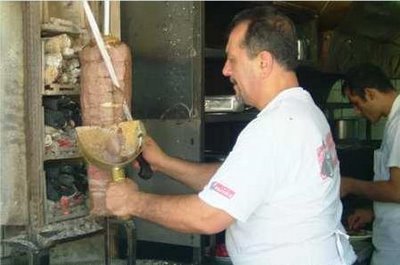
What is Döner Kebap?

Slices of marinated veal on a tall vertical spit and grilled as it slowly turns are delicious. The cooked parts of the cone of meat are cut in very thin slices by a huge sword-like knife, and arranged on a plate with Ace or flat pide (pitta) bread. This dish is the most formidable obstacle to the victory of the hamburger in the fast food market. Doner kebap in rolls with slices of pickle and chips is the most common stand-up lunch for city office workers.

Tuesday, November 07, 2006

Turkish Raki

The reason raki is rightfully considered as the national drink of Turkey is that raki was discovered by Turks.

Today, the entire world admits that raki was first produced in the Ottoman Empire . The reason raki is referred to as ‘lion's milk' is that it is white in color like milk and in the old Ottoman pubs it used to be served in cups with lion embossing. Evliya Çelebi, the legendary world trotter, used to speak about the raki merchants as ‘ Arak retailers'. The European Council Spirits Expressions Committee has named raki ‘Turkish Raki' similar to other spirits such as Scotch Whiskey and Irish Cream Liquor.

Famous Turkish Raki, contains 40-45%alcohol

Some people believe that the word ‘Raki' comes from the type of grape called ‘Razaki', while others believe it comes from ‘ Arak ', which is produced in Eastern Mediterranean using the roots of dates. One possibility is that the anis flavored spirits made with razaki grapes was called ‘raki'.

In the last 300 years, this real Turkish spirit was mixed with many varieties from bananas to cloves, from mastica to lemons, but at the end anise was found to be the ideal flavor for raki.


Until 1944, when raki production and sales were put under government monopoly, raki producers were located in all major cities as well as Eskisehir , Edirne , Muğla, Antalya , Canakkale, Kocaeli, Konya , Samsun , Trabzon . In 1938, there were 48 raki producers and over 70 brands.

The production under government monopoly continued until 2004 and Efe Raki became the first private sector production raki in Turkey and in the world.