Google and Real Turkey

Özel Arama
I am a citizen of Istanbul and you can find my recommendations regarding what you should do during your stay at Istanbul.

You know, most of the tourists just visit the most popular places and return to their countries without experiencing the real city life.

The objective of my blog is to help you to see the real city life in Istanbul.
Showing posts with label Istanbul Photos. Show all posts

Wednesday, June 11, 2014

The old town, Samatya

The old town, Samatya

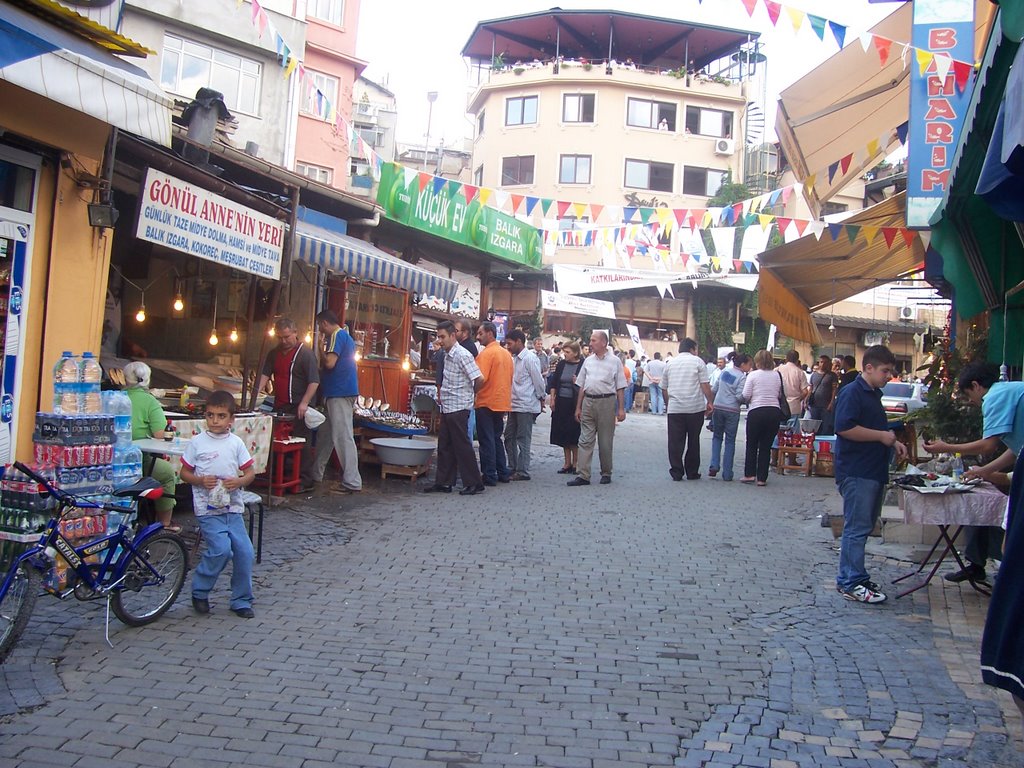
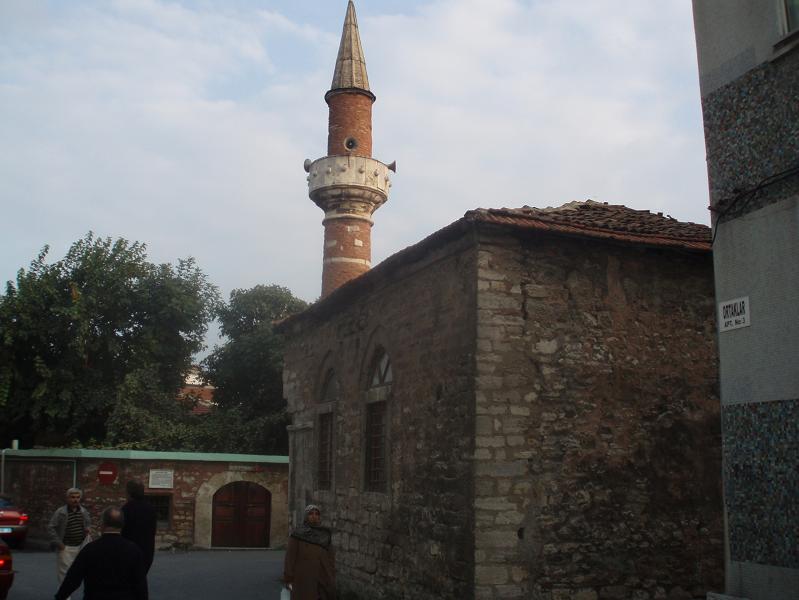
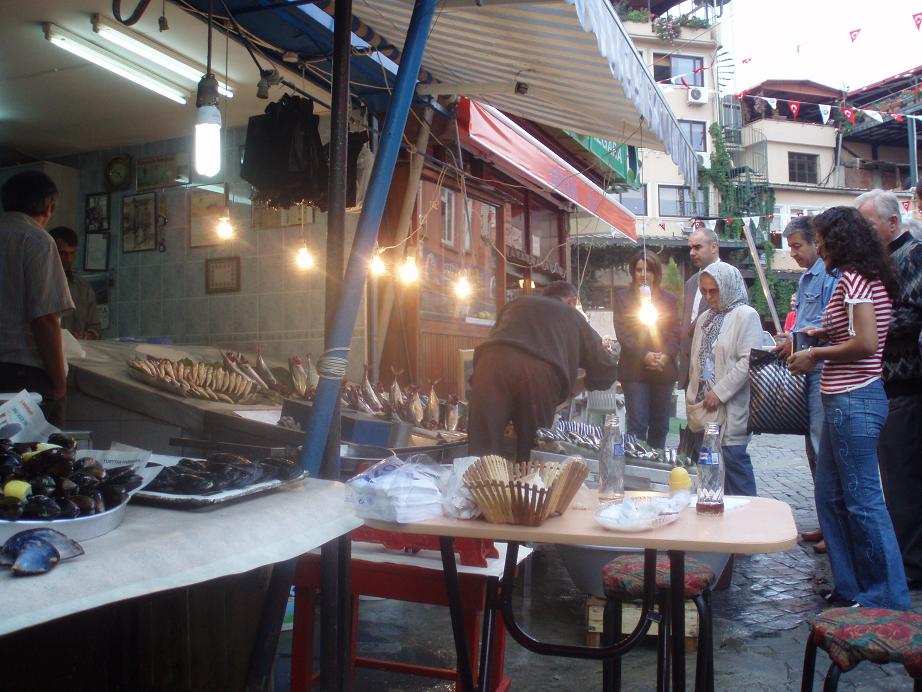
This is the photo of Samatya which is a small town in Istanbul. Samatya is famous for fish, mussel and calamary. We often buy fish from Samatya.

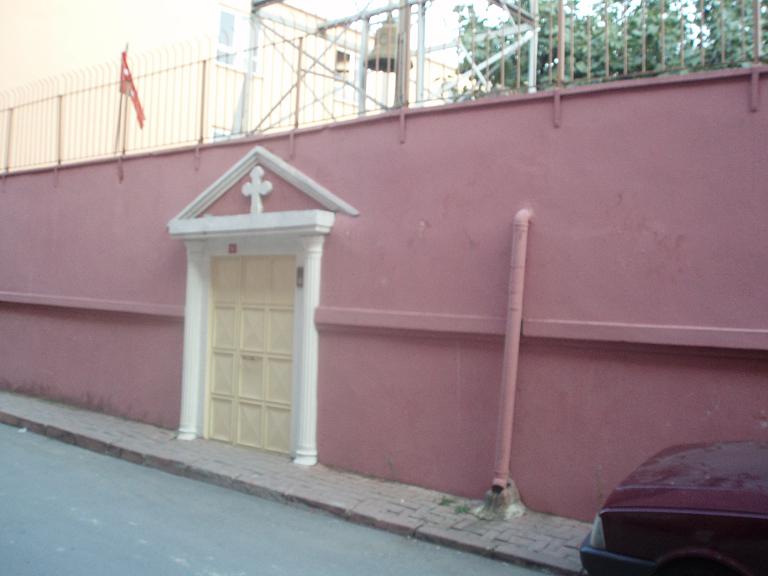
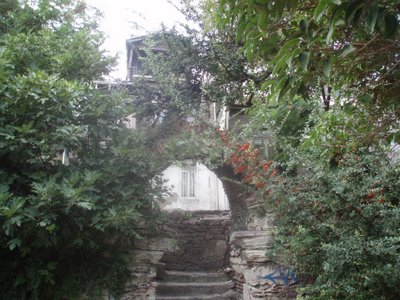
This is the photo of a church in Samatya which was built in the times of Byzantium. There are still old buildings that stand on narrow streets.

Tuesday, June 10, 2014

Seven Towers Dungeon, Istanbul

Seven Tower Dungeon

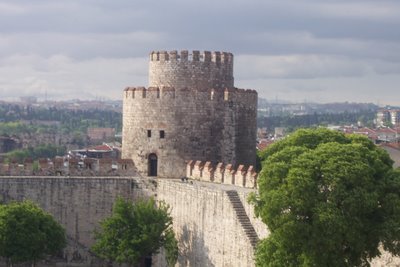
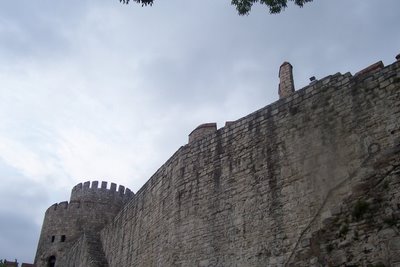
These are the photos of Seven Towers Dungeon which was built in the times of Byzantium as a part of city wall. Ottomans used it as dungeon for famous prisoners.

"Seven Towers Dungeon"

Below, You can see the Istanbul map that shows the location of Seven Tower Dungeon. I have marked its location with a red window.

"The Istanbul map that shows the location of Seven Tower Dungeon"


Wednesday, October 31, 2007

Old Istanbul Photos

The old photos of Istanbul in the time period of 1870 - 1920. Some towns of Istanbul were also as crowded as today a hundred year ago.

Golden Horn - Haliç


Kadıköy - Altıyol


Yedikule - İstanbul Surları


Tünel Meydanı


Besiktas Barbaros Bulvarı


Galatasaray - Istiklal Avenue / Street


Galata Bridge


Aksaray - Istanbul


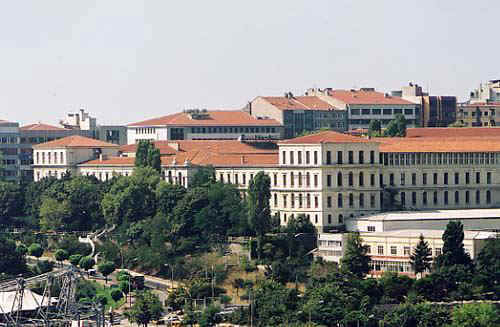
Istanbul Technical University - Architecture Faculty


"Real Turkiye"

Sunday, September 30, 2007

Kill The Rich!

The gap between rich and poor becomes larger and larger every day and this causes hate and anger among poors against rich ones. I have taken this photo at Etiler town in Istanbul.

Wednesday, February 14, 2007

Fransız Sokağı - French Street

If New York has Chinatown and Little Italy, then Istanbul has "French Street" (Fransız Sokağı). "Rue Française", with tented buildings, street musicians, cafés, bars and art centers, opened in summer of 2004.


The street behind Galatasaray High School known as Cezayir (Algeria) Street was completely renovated from head to toe by a group lead by Mehmet Taşdiken within the scope of a two-year project. The buildings and sidewalks were improved and a special music system was established. Taşdiken had close contacts with the Municipality of Paris, so the stones of the street were arranged by Parisian architects, and 100-year-old coal-gas street lamps from the Municipality of Paris were installed.

Mehmet Taşdiken says "the French have a very important legacy in Beyoğlu. Most of the establishments of Beyoğlu, such as the first cafés and first movie theaters, were established by the French in the 19th century and the buildings on the left of Cezayir Street bear the signature of French engineer-contractor Marius Michel, who lived in Istanbul between 1890 and 1910 and built the Karaköy and Eminönü docks."

Fransız Sokağı has a covered area of 9,000 square meters and a capacity of 3000 people together with the open-air areas. The number of daily visitors is around 6.500. The heaters on the streets allow the open areas to be used even on cold days.

Various establishments in two-three story buildings have turned Fransız Sokağı, formerly Cezayir Sokak or Hayriye Çıkmazı, into a 7-day-a-week live culture and entertainment center, with cafés, restaurants, street concerts and artists, and an art gallery.

Friday, December 15, 2006

The history of the Basilica Cistern


The largest and most magnificent covered cistern in Istanbul is entered through a small building to the west of the Hagia Sophia Square. The ceiling of this forest of columns is made of brick and is cross-vaulted. The name of the cistern comes from a basilica that was once located nearby. It was built during the reign of Justinian I (527-565) to supply water to the palaces in the vicinity. Its 336 columns are arranged in 12 rows of 28 each. The cistern measures 140 by 70 meters. The columns are topped with capitals, some of them plain, but most in Corinthian style. The water level in the cistern changed from season to season. The water was distributed through the pipes at different levels in the eastern wall. The ground was cleared during the major restoration in 1987, and when over one meter of mud was removed, the original brick pavement and two marble Medusa heads at the base of two of the columns were revealed. The walkway that was constructed at that time enables visitors to walk around the cistern.

Friday, December 08, 2006

City Life in Istanbul

Lucky citizens live next to Bosphoros. It is heaven!


Istanbul is not only a historical center but also the business and trade center of its region.


Citizens of Istanbul are always in hurry, vessels make it easy to travel in Istanbul because the traffic is very heavy!


Fishing is widespread among Istanbul citizens.

The City of 4 Elements, Istanbul


Throughout history, Istanbul has been home to countless societies and cultures. Yet this “beautiful harmony”, which is embedded in the city’s foundations and entwined in the branches of its family tree, is not just a pleasant memento from a bygone era. Istanbul retains still its rich cosmopolitan character, sometimes concealing and sometimes revealing the evidence of its unrivalled physical and cultural legacy.


The city is a living example of the much sought-after meeting of civilisations - something so desperately missing in the modern world that the search for it seems almost utopian. For more than two thousand years, as if inspired by Aristotle’s theory of the four elements, the city has captivated humankind’s attention.Once it was gold that people saw as the perfect blend of the four elements. Istanbul, which once ruled lands on three continents, throughout the ages has served as a magnet for migrants for whom its streets are paved with that proverbial gold. After all the traumas it has experienced since its foundation, symbolically guided by the four elements, Istanbul is now promising to revitalise the formula imprinted in its genes. In cultural and in artistic terms it will be be worth its weight in gold to the world as a European Capital of Culture.


Resource: http://www.istanbul2010.org

Tuesday, November 28, 2006

Kız Kulesi (Maiden's Tower)

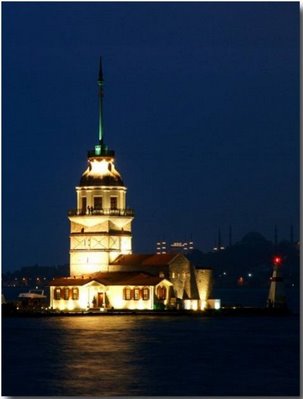
Maiden's Tower is a very interesting place which stands on the bosphoros; I have found stories about it. Let's read them!

The first story about the Maiden's Tower was a love story told by Ovidius. This story, relating to the sad love of Hero and Leandros, begins with Hero leaving the tower. Hero is one of the holy women of Aphrodite, and love is banned for her.


She leaves the tower years later to attend a ceremony to be held at the Aphrodite temple, and there she meets Leandros. These two youngsters in love with each other, bless their love with Leandros visiting the tower at nights. The Maiden's Tower witnesses the devotion and the forbidden love of these two young people every night. On a stormy night when Leandros was swimming to the tower, the love light that Hero burnt was put out. Leandros losing his way in the darkens is buried in the waters of the Bosphorous. Hero, seeing that her lover dies, lets herself in the arms of the waters as well. Other than this story on lovers that cannot meet, there is a snake story, similar to the Cleopatra's end. According to a prophecy, a king is to lose her beloved daughter at the age of eighteen, with a snakebite. Therefore, the king has this tower in the middle of the sea repaired, and places his daughter here. Proving that the fate cannot be escaped, a snake emerging from a grape basket sent to the tower, empties its poison to the princess. The king has an iron vault prepared for his daughter and places it above the gate of Hagia Sophia. The last story is from the Ottoman times. It is the story about Battal Gazi raiding the Maiden Tower with his soldiers and taking away the hidden treasures and the daughter of Üsküdar Tekfur (Governor). Battal Gazi took the daughter of the tekfur and the treasury, and rode away from Üsküdar, on his horse. The expression "Atı alan Üsküdar'ı geçti" (He who took the horse is already past Üsküdar) is a reflection of this story. Another aspect of this story coming to the present is about the name of this tower. In reference also to the princesses in other legends, Turks named this tower Kız-Kulesi (the maiden's tower). The tower, which was called as Arkla (small castle) in the Antiquity and Damialis (calf), was also famous with the name Tour Leandros. Currently it is "Kızkulesi" (the Maiden's Tower), and known with this name.

Tuesday, November 07, 2006

Rumeli Hisari

Rumeli Hisari is the fortess that stays on the European side of Istanbul. This was built in 4 months in 1452 by the Ottoman Turks. This spot is one of the narrowest sections of the Bosphorus.The fortress was built here to stop any ships passing through Bosphorus.

Metro of Istanbul

Metro:

The 7.6 km-long line runs through the districts of Taksim, Osmanbey, Şişli, Gayrettepe, Levent, 4. Levent. It is a short metro but very useful for most of the citizens because if you do not travel by metro, it will take your one hour to pass the 7,6 km.


There are 6 stations at these points. The journey time between the two main stations (Taksim-4. Levent) is 12 minutes, with trains departing every 5 minutes. Passenger capacity is 70,000 persons/hour-one way.

Sunday, November 05, 2006

Unbelievable Traffic Jam of Istanbul

The population of Istanbul is 15 million and there are more than 2 million automobiles. Therefore Traffic jam is unavoidable. Anyone who loves Istanbul, should get used to its traffic problem.


Saturday, November 04, 2006

Center of the world, Istanbul

Magnificent Istanbul where Europe and Asia meets...


Famous Quotes about Istanbul

"If one had but a single glance to give the world, one should gaze on Istanbul." by Alphonse de Lamartine

"If the whole world were a single country, Istanbul would be the capital." by Napoleon Bonaparte

Wednesday, November 01, 2006

Kuleli Military High School

Kuleli Military High School is the first military high school in Turey, located in Çengelköy, Istanbul. It was founded in September 21, 1845 by Ottoman Sultan Abdülmecid I, making it the oldest high school in Turkey as well.

Tuesday, October 31, 2006

"Istiklal Caddesi" The most crowded avenue in Istanbul


Istiklal Avenue (Istiklal Caddesi in Turkish) is one of the most famous avenues in Istanbul, Turkey, visited by nearly 3 million people in a single day over the course of weekends. Located in the historic Beyoğlu district, it is an elegant pedestrian street, approximately three kilometers long, which houses exquisite boutiques, music stores, bookstores, art galleries, cinemas, theaters, libraries, cafés, pubs, night clubs with live music, historical patisseries, chocolateries and restaurants. The avenue, surrounded by the unique nineteenth century Turkish architecture, starts from the medieval Genoese neighbourhood around Galata Tower and ultimately leads up to Taksim Square.

Resource: http://en.wikipedia.org/wiki/Istiklal_Caddesi

Tuesday, October 17, 2006

Hagia Sophia - old Church and Mosque, now a Museum

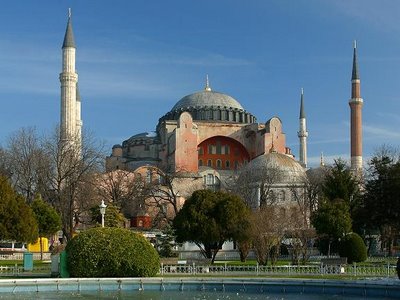
Probably Istanbul's most famous landmark, the Hagia Sophia (also spelled Ayasofya) was built by the emperor Justinian I in the year 537 AD. Built in only six years, the structure was designed by the architects Anthemius of Tralles and Isidore of Miletus. On May 7, 558, the dome of the church collapsed due to a December 557 earthquake, and though a new dome was quickly rebuilt, historical records tell us that it was not identical to the original.

Hagia Sophia, Istanbul


Everyone who come to Istanbul, firstly visit Hagia Sophia. It is holy for christians and muslims. When Ottomans conquered Istanbul in 1453. Hagia Sophia is converted to mosque. After the establishment of Turkish republic, Hagia Sophia became a museum.

Sunday, October 15, 2006

Istanbul Night Life

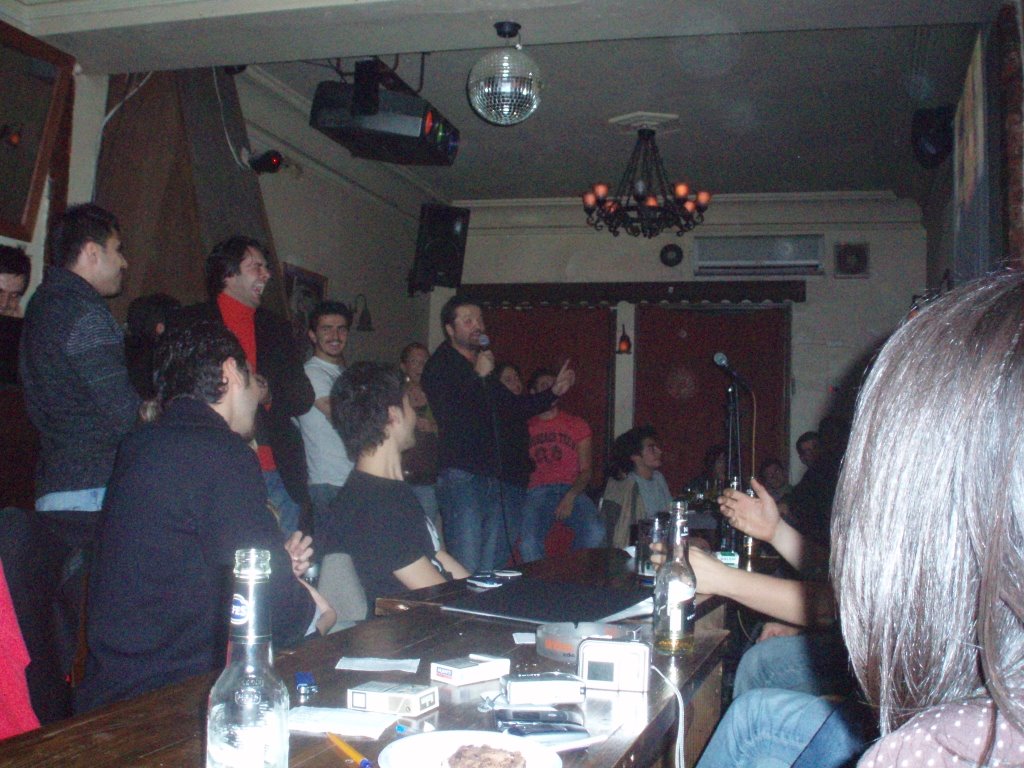
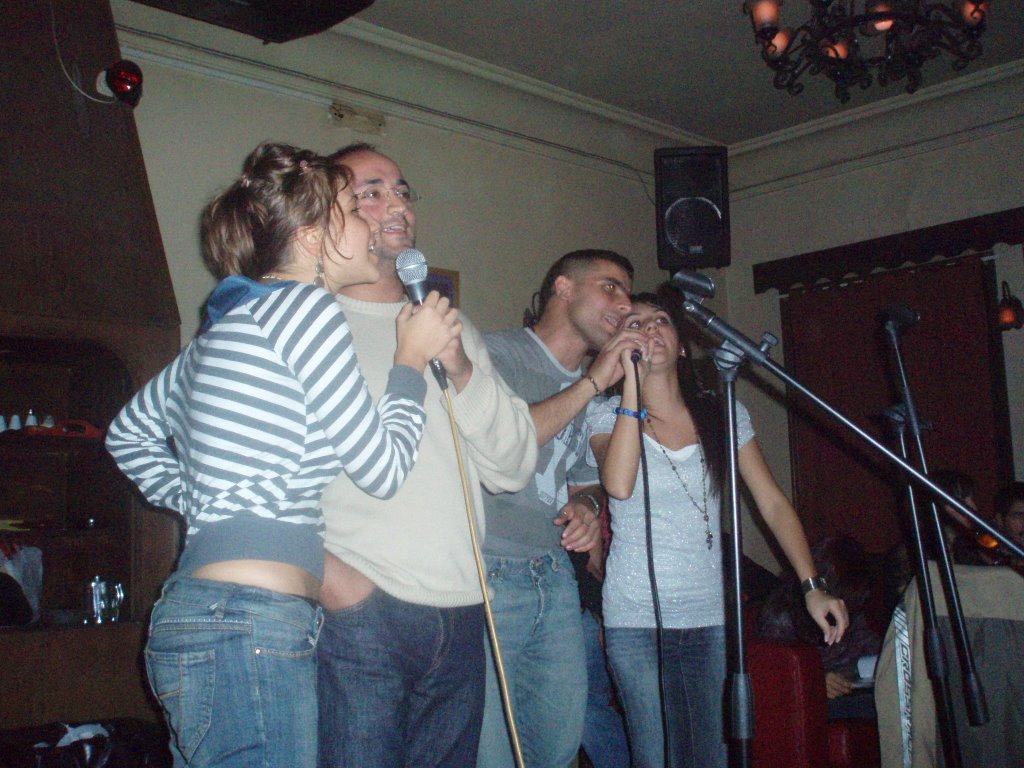
This is a Kareoke Pub, We are all singing our favourite songs and laughing at each other's performance. It is really funny to make kareoke!
Since all the singing performances were terrible, my enjoyment at this night was drinking our best beer, Efes. Most of the Turkish people prefer to drink Efes Pilsen(which has the %70 of the share in Turkish beer market)


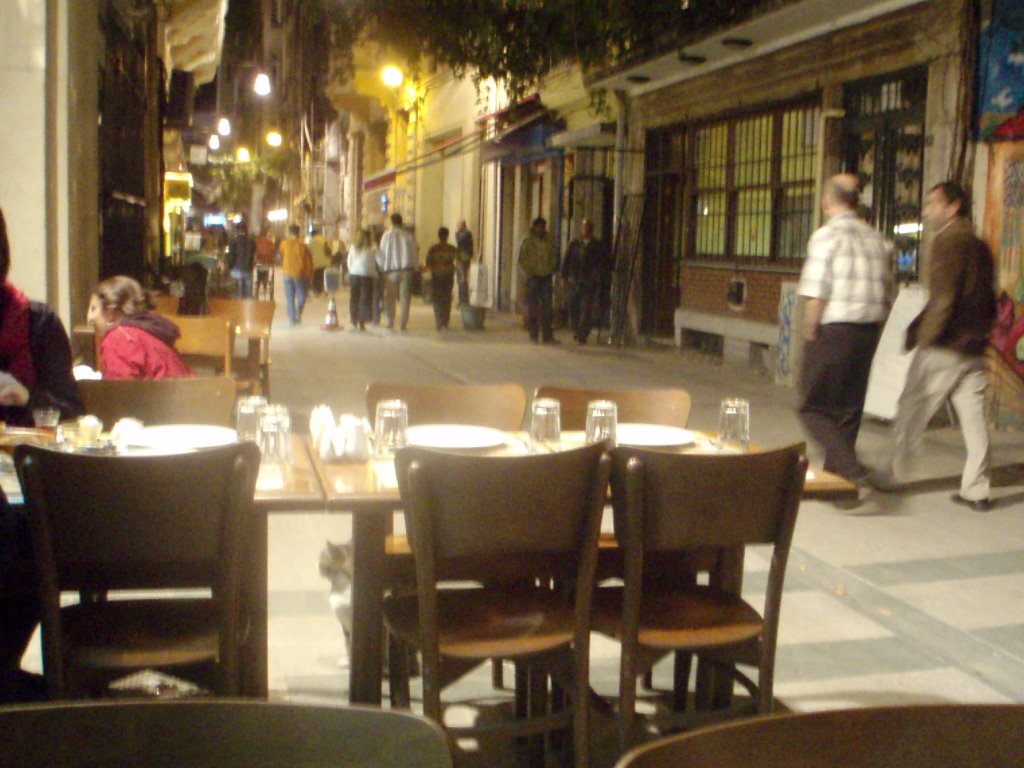
Here is a restaurant, that we mostly prefer to eat something like spaghetti and drink beer. The restaurant has tables on the street.

Sunday, October 08, 2006

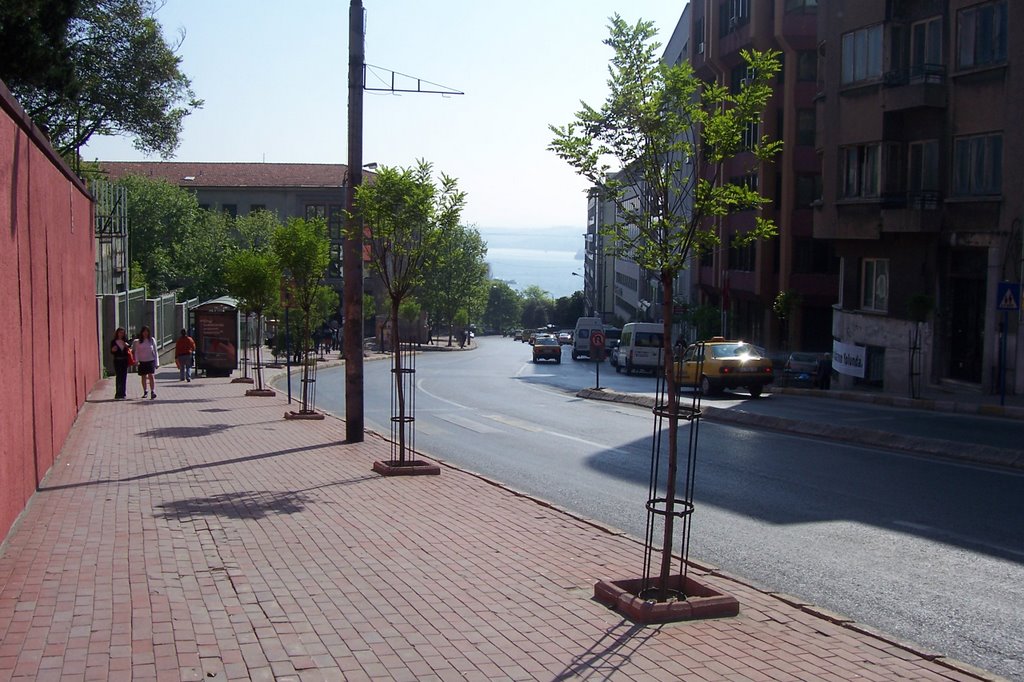
My University: Istanbul Technical University

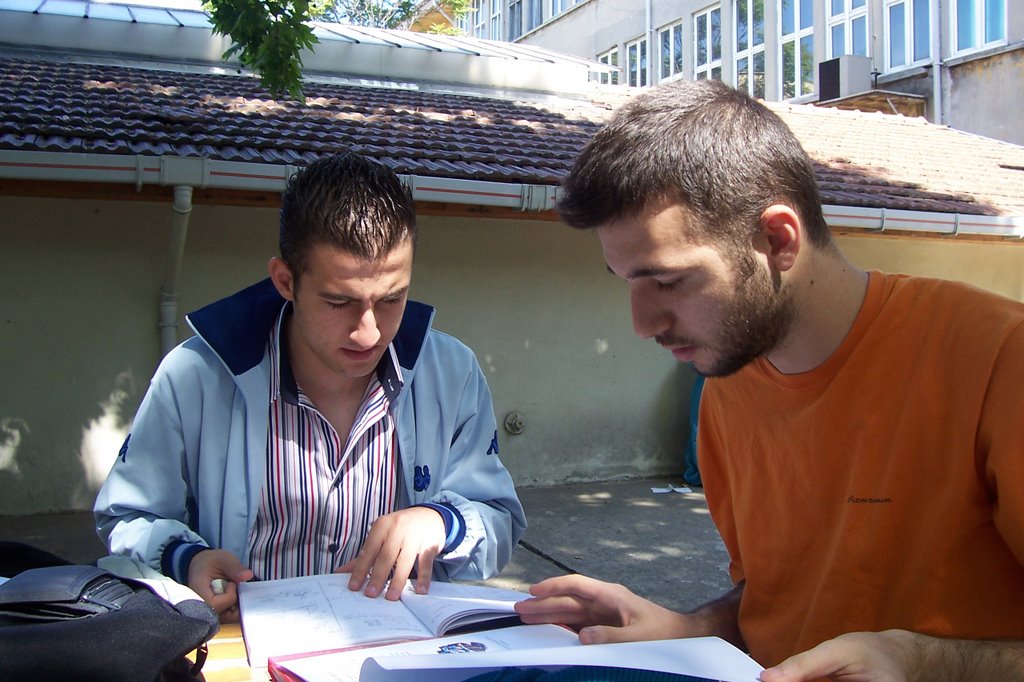
I have graduated from Istanbul Technical University last year. I am now a mechanical engineer. I am missing my university times and my friends. It was very exciting. You see the way of my university in this photo. The bosphorous can be seen from my university, its scene is wonderful.


Thursday, August 10, 2006

Istanbul City Life

The gate of a church in Fatih town of Istanbul where is called as "Old Istanbul"


Near the church on the same street, there is a msoque that was built in the times of Ottoman Empire in 1600s


The center of Samatya Fish Market, Turkish people are buying fish.


This is the part of Byzantium city walls, a 1000 years gate.